5 Most Common Upgrade Areas in Mid-Scale U.S. Hotels (Holiday Inn / Hampton / Comfort Inn)
Mid-scale hotels across the United States—such as Holiday Inn, Hampton Inn, Comfort Inn, Best Western, and Fairfield—are experiencing increasing pressure to keep up with guest expectations. As customer reviews become more influential and competitive properties continue to upgrade, many hotel owners are prioritizing targeted renovations that deliver both visual impact and measurable returns.
Based on industry observations and order trends, the following five areas are the most frequently upgraded during U.S. mid-scale hotel renovations. These upgrades not only improve guest satisfaction but also significantly increase operational efficiency and property value.
1. Guestroom Casegoods (TV Cabinet, Wardrobe, Nightstand, Desk)
Guestrooms remain the core of the hotel experience. Furniture that is outdated, damaged, or lacking functionality directly affects reviews and repeat bookings.
Common upgrade focuses include replacing old laminate furniture with durable, commercial-grade materials, adding charging ports and cable-management features, modernizing color schemes to match brand standards, and using space-saving designs for better room flow.
Hotels typically report a 10–18% improvement in guest satisfaction after room furniture upgrades and lower maintenance costs due to more durable commercial materials.
TopIn Industry frequently supplies complete casegoods sets that meet brand design standards while offering custom variations for independent properties.
2. Corridor (Hallway) Upgrades
Corridors create the first impression before a guest enters the room. Worn wall panels, outdated carpet patterns, or low lighting can instantly reduce perceived quality.
Common upgrade needs include wall protection panels such as wainscot or wall guards, new carpet designs or SPC flooring, updated lighting fixtures, and artwork and signage aligned with brand standards.
Improving corridor aesthetics also helps raise the “safety” perception, an important factor in guest reviews.
3. Lobby & Public Seating Areas
The lobby has evolved into a multifunctional area serving as check-in space, co-working seating, social lounge, and breakfast zone. Many older hotels still have oversized or outdated furniture that no longer fits modern travel needs.
Top upgrade priorities include modular sofas and commercial lounge chairs, coffee tables, community tables, task lighting, durable fabrics with stain-resistant performance, and design aligned with a clean, modern, mid-scale aesthetic.
A well-designed lobby increases dwell time and improves overall property value perception.
4. Breakfast & Dining Area Furniture
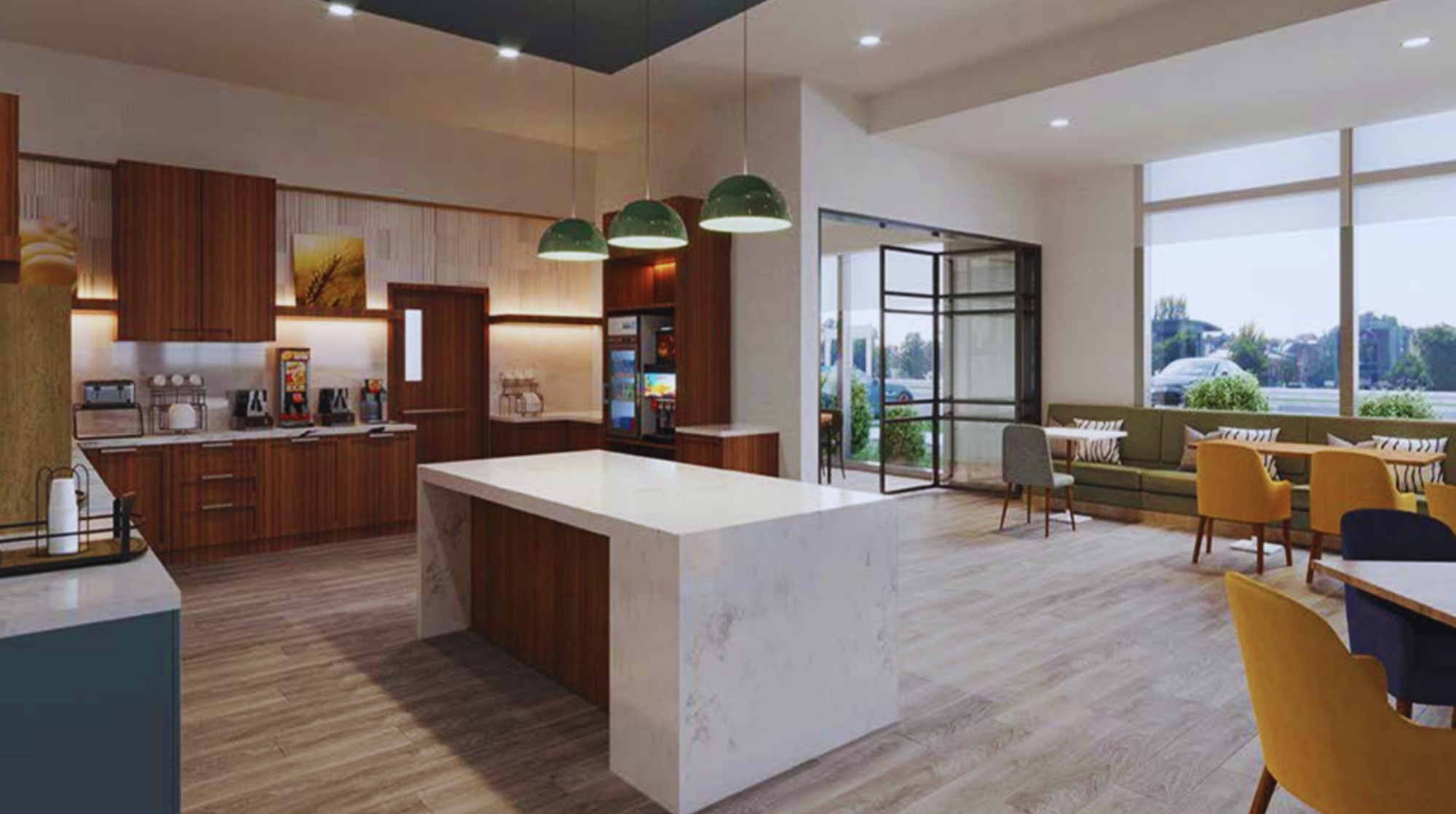
Breakfast areas receive high traffic and require commercial-grade durability. Many hotels upgrade this zone to improve guest flow and reduce daily wear.
Popular upgrade items include dining chairs with reinforced frames, laminate or solid-surface tabletops, bench seating and banquettes, and storage cabinetry for breakfast equipment.
A redesigned breakfast area can increase seating efficiency by 15–20%, reducing crowding during peak hours.
5. Front Desk & Back Office Cabinets
High-visibility and high-use areas such as the front desk often show wear faster than guestrooms. Upgrading this area enhances brand image while improving staff workflow.
Key updates include new front-desk millwork with modern finishes, storage cabinets and ADA-compliant counter designs, more efficient layouts for staff operations, and integration of lighting and signage.
Front desk upgrades greatly affect first impressions and can raise guest satisfaction scores immediately.
Why Mid-Scale Hotels Choose TopIn Industry
TopIn Industry provides one-stop FF&E solutions, including guestroom furniture, public-area seating, lobby casegoods, and custom millwork. We support hotel owners with commercial-grade durability, brand-standard designs or customized options, professional shop drawings and mockup rooms, efficient production and international logistics, and installation support when needed.
As U.S. hotels continue to modernize, strategic upgrades in these five key areas help properties enhance guest satisfaction, stay competitive, and protect long-term asset value.


